The Diary of a CEO: A Stoic’s Perspective (book review)
The Diary of a CEO is a great book that has a lot of condensed knowledge in its pages. As a Stoic, I see a lot of Stoicism in the content.

source: Nano Banana
Things like accepting death on a daily basis — Memento Mori.
Premeditatio Malorum, where you think about the worst that can happen. Surrounding yourself with people who help you progress. Discipline and doing things consistently. Believing in your self-story refers to the fact that you are what you think — something Epictetus and Marcus Aurelius described well. So many things you read between the lines are related to Stoicism.
Besides that, a few things enlightened me.
The “five buckets” concept is the greatest lesson I took from this book. Deciding how to fill your buckets and in which order is something I will definitely think about in the future.
What I also liked about the book were the mental biases and cognitive tricks that are mentioned. For some reason, prioritizing your health, as described by Steven, has triggered something in me. I never took care of my body, but since reading this book, it has become a daily thought.
I already knew about Kaizen but reading about it again made it stick. My mindset has always been that while something is good or great, it can always be better. This, it seems, is Kaizen: improving on the smallest things every day.
Below are some of the rules I found useful and interesting enough to jot down. I already knew many of them, but they were buried deep in my brain; reading the book reactivated them.
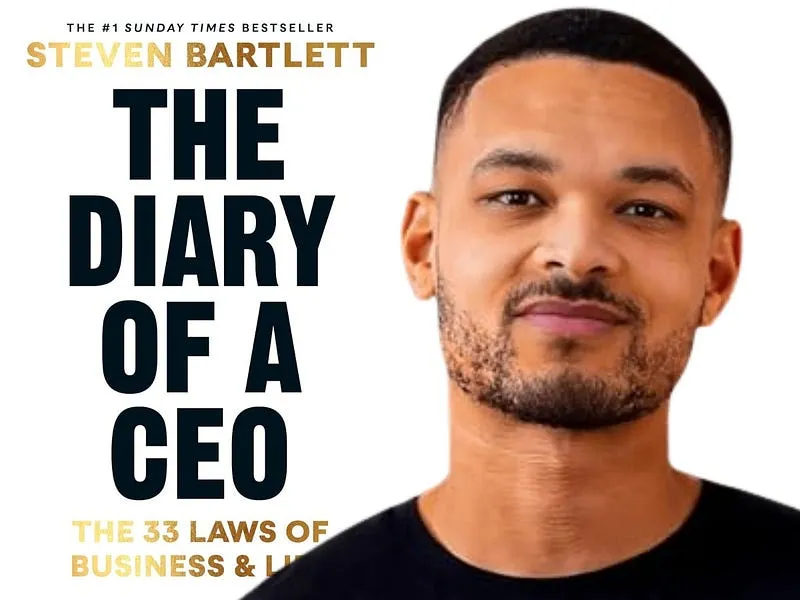
The book is divided into four Pillars that categorize the 33 rules of business and life: Self, Story, Philosophy, and Team. In this document, I want to capture the lessons I learned from this book.
Pillar 1: The Self
The 5 Buckets
This law explains the five buckets that determine your human potential, how to fill them, and in which order to fill them.
The first lesson is the concept of the five buckets. It’s a stupid metaphor, but one that is clear. Everyone has five buckets that need to be filled throughout the journey of life.
1. Knowledge. What you know and understand.
2. Skills. How you apply what you know.
3. Network. The people you know and can collaborate with.
4. Resources. What you have in terms of assets and tools.
5. Reputation. How the world perceives and values you.
The goal is to fill these buckets, but in the right order. At first, I was really skeptical, but I gave it some thought, and it’s right.
You can call it what you want, but you have to gather as much knowledge as possible in life. This is also one of the goals of the Stoics. What I didn’t know was that there was an order, and the order is rather important and logical.
Most people and I fill these at random because we just didn’t know better. Having read this several times now, I find it helps me with decision-making in my life and as an entrepreneur.
To Master It, You Must Create an Obligation to Teach It
This law explains the simple technique to become the master of your craft and how to use it to develop skills, master any topic, and build an audience.
If you want to learn something, read about it.
If you want to understand something, write about it.
If you want to master something, teach it.
This is “The Feynman Technique,” named after physicist Richard Feynman, in which a person attempts to write an explanation of some information in a way that a child could understand, developing original analogies where necessary. When the writer reaches an area which they are unable to comfortably explain, they go back and re-read or research the topic until they are able to do so.
This is also a personal experience I have. In this age of short-form content and videos, I noticed that knowledge doesn’t stick in my brain. So I went back to reading and studying books, as I am doing here.
I read with a pencil and highlight things that I find interesting and want to retain. Then I go through the book again, research the topics, write down the key points, and add my own ideas or opinions. Then I try to repeat it several times through spaced repetition by reading it over and over at different intervals and trying to explain it in my own words as if I’m doing a presentation.
You Must Never Disagree
This law will make you a master of communication, winning arguments, being heard, and changing people’s minds.
We have two ears and one mouth so we should listen twice as much as we speak. — Epictetus
The Stoics teach that you don’t always have to share your opinion, so over the years, I have learned to be very cautious with sharing my thoughts and selective about who I share them with. Therefore, I listen more.
By listening more, you understand people better, and when you listen well, people feel heard and understood. Never reply in a negative way, like, “But…” or “I disagree…”
You Must Lean Into Bizarre Behavior
This law teaches you how to stay at the forefront of the rapidly changing world we live in, how to capitalize on change, and how to avoid ever being left behind by any new revolutionary technology.
Cognitive dissonance is described as a mental phenomenon in which people unknowingly hold fundamentally conflicting cognitions. Being confronted by situations that create this dissonance or highlight these inconsistencies motivates a change in their cognitions or actions to reduce this dissonance, perhaps by changing a belief or by explaining something away.
When we don’t understand something — a person, a new idea, or a technology — instead of listening and learning, we often attack it to ease our cognitive dissonance.
Sometimes an opportunity, a new perspective, or a crazy idea crosses my path: a new, exciting job in a completely different industry; a totally different view I didn’t know about; speaking at a conference.
So whatever opportunity or challenge crosses my path, I take it with both hands. This leads me to new groups of people with different skills, views, visions, and behaviors, giving me so many opportunities to learn.
I would rather have regrets for the things I have done than for the things I haven’t done. — Younes Baghor
Believe in Your Self-Story
Your self-story determines your success in life.
Be convinced of yourself, and don’t talk yourself down. Ignore that little voice in your head. You are beautiful, you are accountable, you get the job done. You can learn anything if you set your mind to it. Don’t say, “I can’t do this.” Say, “I know I have to learn a lot, and I will get there.” Be proud of yourself. Some people would call that arrogance, but you have to be your biggest fan. If you don’t believe in yourself, why should someone else?
You are beautiful. — Christina Aguilera
Never Fight a Bad Habit
How to make and break every habit. It’s about replacing habits instead of relying on willpower.
A habit loop is a series of actions:
- Cue: The trigger (dinner, lunch, boredom)
- Routine: The habit (smoking)
- Reward: The result/impact of the habit (nicotine satisfaction)
To get rid of a bad habit, you have to replace the routine with a new one that provides a different reward. You will end up doing the thing you are focusing on, so don’t focus on stopping smoking, but on the behavior you want to replace it with.
I found this rather inspiring and very good advice. In just a few weeks, I introduced drinking at least 1.5 L of water daily. I was surprised myself by how well that transition went. In this case, the reward was having a healthy body. Before, I thought it was one or the other. I still drink coffee (but without sugar), and the water is an additional step toward having a healthy body.
Always Prioritize Your First Foundation
Define the right priorities so you can live long and have time for your other priorities.
For some reason, this really stuck with me. I meditate and study to keep my mind working and healthy, but working on my body is new to me. I have never done anything to work on my body, but now it’s on my mind every day. I watch what I eat, drink water, and do exercises.
Take care of your health. You only have one body and one mind.
Pillar 2: The Story
Avoid Wallpaper at All Costs
This will teach you the science of grabbing people’s attention.
Habituation is a built-in neurological device that helps us to focus on what matters and tune out the things that our brain doesn’t need to focus on. Examples include:
- Cutting your arm in the mountains for survival
- Not smelling garbage after working with it for a while
- The hum of an air conditioner
- Living near a train track
To grab attention, you need to bypass people’s habituation filter. “Wallpaper,” as Steven calls it, is the overuse of popular terms, phrases, and calls to action to the point that our brain tunes them out.
To infiltrate the brain, use terms that are unexpected, unusual, and unsaturated.
To be heard, tell stories in an unexpected, unrepetitive, and unfiltered way.
Let Them Try and They Will Buy
The endowment effect is a cognitive bias that causes people to overvalue something they possess, regardless of its objective value.
Pillar 3: The Philosophy
You Must Sweat the Small Stuff
Your success will be defined by your attitude toward the small stuff.
Kaizen means continuous improvement. It’s not about making big leaps forward but rather making small things better, in small ways, everywhere you can. Kaizen was developed at Toyota.
At Toyota, everyone is required to contribute at least two improvements a month.
For this to work, to stimulate your people, your people need to be driven by their own curiosity, motivation, and care.
Motivation crowding: If you attach a financial reward to ideas, it can interfere with or even eliminate people’s genuine creative energy and ambition.
In my previous team, I introduced the “Improvements Meeting.” This had a page where everyone could propose changes; they could be related to code, workflow, systems, new tools — whatever. You would present your improvement to the team, and the team would try to break it down. There were two outcomes: either you had a great improvement that the team couldn’t break down, or the team started to build on the improvement, making it even better. In both cases, the refined improvement was broken down and planned for the next sprint.
You Must Out-Fail the Competition
This law proves that the higher your failure rate, the higher your chances of success are!
If you want to increase your success rate, double your failure rate. Every time we moved ahead at IBM, it was because someone was willing to take a chance, put their head on the block, and try something new.
— Thomas J. Watson, IBM
Failure and invention are inseparable twins. To invent, you have to experiment.
— Jeff Bezos, Amazon
There are two types of decision-making:
- Type 1: If you walk through a door and don’t like what you see on the other side, you can’t get back to where you were before.
- Type 2: These types of decisions are changeable, reversible — they’re two-way doors. These decisions should be made quickly by high-judgment individuals or a small group.
Get to 51% certainty and make the decision. The truth is that perfect decisions only exist in hindsight.
Bureaucracy is a villain.
— Doug McMillon, Walmart
Bureaucracy — a word that seems to have no successful fans. In simple terms, the worst corporate bureaucracies are companies with lots of rules, long, painful sign-off processes, and several layers of hierarchy between the bottom and the top.
These systems disempower employees, slow companies down, disincentivize experimentation, delay innovation, and stifle the goldmine of ideas that exists in the minds of the workforce.
Failure = Feedback
Feedback = Knowledge
Knowledge = Power
Failure gives you power.
— Steven Bartlett, The Diary of a CEO
You Must Become a Plan-A Thinker
This law demonstrates why your Plan B in life might just be the biggest hurdle to the success of your Plan A.
The first step before anybody else in the world believes it is you have to believe it. There is no reason to have a Plan B because it distracts from Plan A.
— Will Smith
There’s no greater force of creativity and determination than a person undistracted by a Plan B.
This was also an eye-opener. As a technical founder, I was always balancing between continuing to code and becoming a better CEO. It wasn’t really about having a Plan A or B, but this made me realize that I can’t do both. I have to pick one and move forward with full focus.
You Must Make Pressure Your Privilege
This law teaches you how comfort is slowly killing us mentally, physically, and emotionally. It will help you understand how and why we must make life’s pressures our privilege.
Pressure is a privilege — it only comes to those who earn it.
— Steven Bartlett, The Diary of a CEO
Your heart may well have been pounding, you might have been breathing faster, and you might have had clammy hands. Usually, we interpret these physical symptoms as anxiety or signs that we aren’t coping well with the pressure.
But what if you saw them differently — as a sign that your body is energizing you in preparation to face a challenge?
I experienced this comfort myself when I was working at Porphyrio. I had a great job, with a great team, in a great environment, doing amazing things. At that time, I was very comfortable and didn’t do anything besides work hard.
Until the day the company had to cut costs and my contract was not extended after four years. At that point, I realized that I did nothing besides working. I was not prepared to find a new job, didn’t nurture my network, or work on my own business to grow it. It was a hard lesson, but a mistake I will never make again. I will always try to move out of my comfort zone now.
The Power of Negative Manifestation
This law teaches you to see red flags, future risks, and anything else that stands in the way of your success.
The pivotal question is, “Why will this idea fail?”
The Pre-Mortem method is a decision-making technique developed by scientist Gary Klein, which encourages a group to think from a place of failure before a project has begun. The Pre-Mortem relies on your imagination that the patient has died and asks you to explain what went wrong.
The Stoics advise doing Premeditatio Malorum: the premeditation of the evils and troubles that might lie ahead. It’s the exercise of imagining things that could go wrong.
The Discipline Equation: Death, Time, and Discipline!
This law teaches you how to be disciplined in anything you set your mind to through a simple discipline equation, and why discipline is the ultimate secret to being successful in any ambition we have.
At age 45, I have spent 16,425 days and still have 11,825 days of life left to accomplish whatever I set my mind to.
We need to embrace our mortality. By acknowledging our finite nature, we can prioritize what truly matters. The Stoics call it Memento Mori; it’s a Latin phrase meaning “remember you must die.”
Your time and how you choose to spend it are the only influence you have on the world.
Remembering I’ll be dead soon is the most important tool I’ve ever encountered to help me make the big choices in life.
— Steve Jobs, Apple
Being selective about how you spend your time and with whom is the greatest sign of self-respect.
— Steven Bartlett, The Diary of a CEO
Pillar 4: The Team
Ask “Who,” Not “How”
This law shows how to create incredible companies, projects, or organizations the easy way, without having to learn more or do more yourself.
You are a recruitment company. That’s your priority, and founders that realize this build world-changing companies.
We are trained to ask, “How can I do this?” The better question to ask is, “Who is the best person who can do this for me?”
Create a Cult Mentality
This law explains the secrets to creating a truly great culture within any team, company, or organization.
You should run your startup like a cult.
— Peter Thiel, co-founder of PayPal
If you find five incredible A-players, they really like to work with each other because they’ve never had the chance to do that before, and they don’t want to work with B- and C-players. So they only want to hire other A-players.
— Steve Jobs, Apple
Create a culture that is sustainable, where people are authentically engaged with a mission they care about, trusted with a high degree of autonomy, challenged enough in their work, given a sense of forward motion and progress, and surrounded by a caring, supportive group of people whom they love to work with and who provide them with psychological safety.
Leverage the Power of Progress
This law shows the most important force for team engagement, motivation, and fulfillment in any organization. If you can make people feel this, they will love being part of your team.
People want a feeling of progression, and if we aim for perfection, we will fail because perfection is so far away.
With Kaizen, we focus on the small things we can improve. Everything can always be better. Making small changes to improve will give a feeling of progression instead of waiting until you do it perfectly.
Focus on the small wins first, because that is the easiest way to unlock the motivational power of progress — to jump-start the bus, put petrol in it, and get the wheels in motion.
Small wins may seem unimportant, but a series of small wins begins to reveal a pattern. Small wins are compact, tangible, upbeat, and noncontroversial.