Nice thoughts and questions to ask.
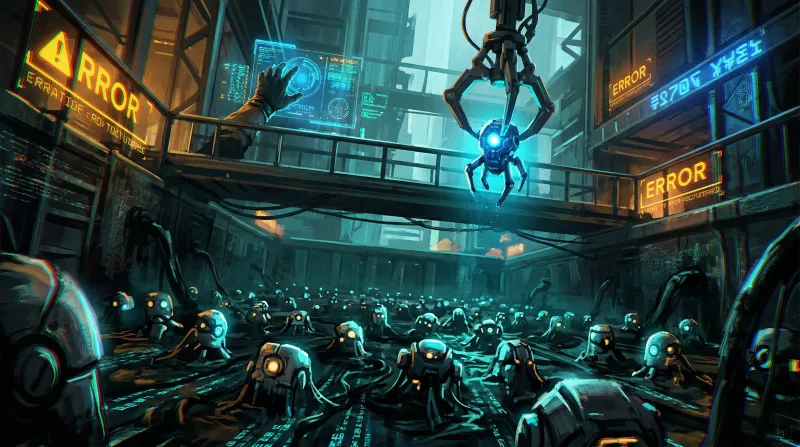
source: Nano Banana
Nice thoughts and questions to ask. But when you start building agents you realize that it's much more complicated.
The first realization is that an agent is not capable without decent coding. For example the creation of the system prompt and other prompts further down the conversation.
Next you realize that 1 agent can't cover what you want so a swarm is needed. A swarm of other agents and tools. Now you dive deeper in the mud of orchestration.
- Which agents should I create?
- Which tool agents do I need to build?
- Which agent will communicate with which agent or tool?
- Does an agent in the swarm answer a user directly or will we back track the pipeline and pass everything through the orchestrator?
- Wow having so many agents and tools makes it hard for an agent to pick the right one, and costs rise exponentially.
When you finally have answers to these questions and created you schemas, you realize that LangChain is not going to help you get your agents into production or is scalable.
The next issue is data, where is it?
- Is it accessible for agents and tools?
- Does it have meaning?
- Does it have context?
When figuring this out you realize that GPT4 has no clue of your business, processes or value creation. Which will result in redesigning and rewriting your prompt.
We have been there with several clients. So we realized that we need something better. So the first problem we tackled is building a framework that is isolated and scalable and gives control to your developers and business.
Based on our 15+ years building scalable web enterprise applications we open sourced Atomic-Agents.
Next we have to find solutions for the data pipeline.
Take a look at Atomic-Agents at https://github.com/BrainBlend-AI/atomic-agents. Feedback and contributions are always welcome.